 What If UniverseOpen the simulator
Earthquake simulator
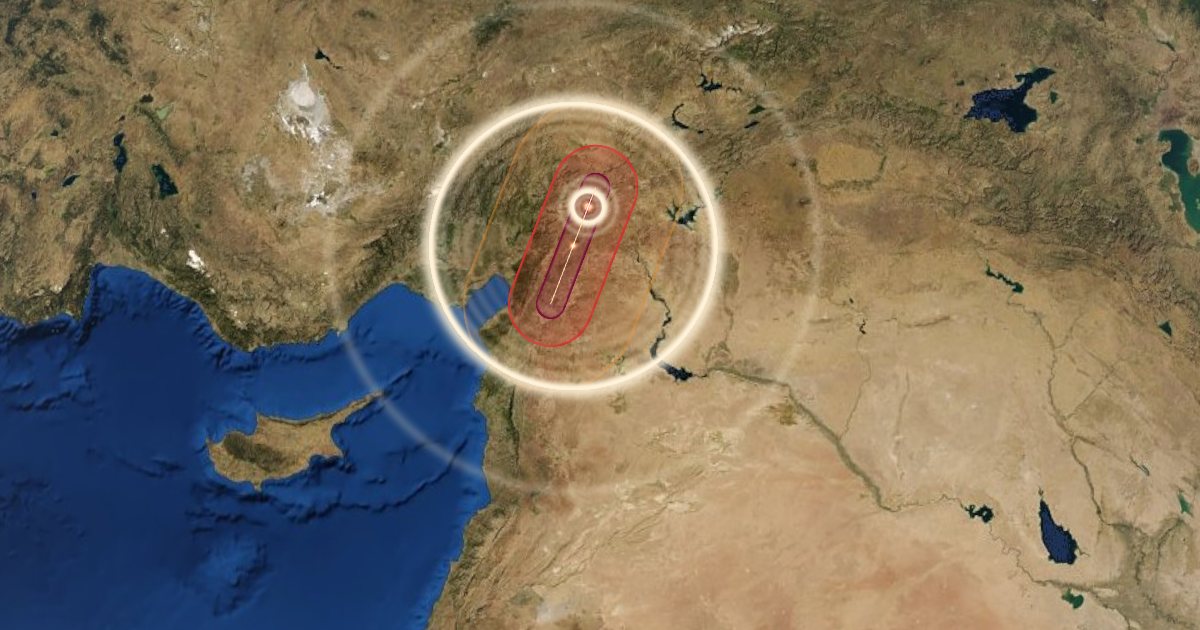
Pick a magnitude from 5 to 9.5, click anywhere on the globe, and see the fault rupture, the shaking spread out and what it does to the people living there.
 Try it now: free, in your browser
What the simulator shows
Big earthquakes break a long stretch of fault, up to about 1,500 km for a magnitude 9.5, so the worst shaking runs along that line rather than around a single point. The simulator draws the fault and the zones of violent, severe, very strong and strong shaking, then counts the dead, the injured and the homes destroyed.
Losses depend on how buildings are made. The same quake kills far fewer people in Japan or Chile than in Haiti, and the simulator accounts for that country by country. Fires in crowded cities, strong aftershocks in the days after, nearby volcanoes being shaken awake and the later deaths from lost homes, water and hospitals are all part of the result.
When the fault lies under deep sea, the sea floor jumps and starts a tsunami. Try the Tōhoku 2011, Sumatra 2004 or Chile 1960 presets to see it.
How it is calibrated
Fault length follows Wells and Coppersmith (1994). Losses are shaped like the US Geological Survey PAGER model and tuned so that historic quakes come out close to their real tolls: Haiti 2010, Türkiye 2023 and Tōhoku 2011.
Questions
What is the biggest earthquake ever recorded?
The 1960 Valdivia earthquake in Chile, magnitude 9.5. It ruptured about 1,000 km of fault and started a tsunami that crossed the Pacific.
Why do earthquakes of the same size kill so differently?
Building quality and where people live. A magnitude 7 under a city of weak buildings, like Haiti in 2010, can kill over 100,000 people; the same quake in Japan or California kills far fewer.
Could many huge earthquakes destroy the world?
Not on their own. Shaking fades within a few hundred kilometres. Even dozens of magnitude 9.5 quakes wreck regions, and the later deaths from hunger and lack of care can be larger than the quakes themselves.
All numbers in the simulator are rough estimates meant to show what could happen, not predictions.