 What If UniverseOpen the simulator
Asteroid impact simulator
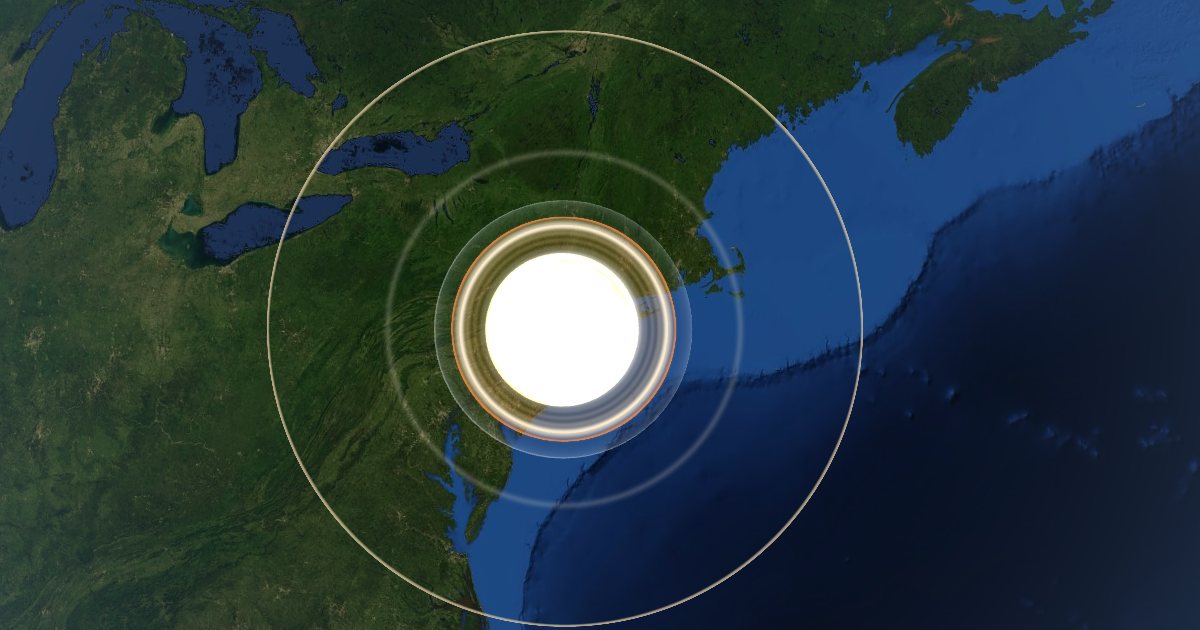
Pick a space rock from a 20 metre meteor to the 10 kilometre dinosaur killer, aim it at any city or ocean, and watch it come down on a realistic 3D Earth.
 Try it now: free, in your browser
What happens when it hits
Small stony asteroids rarely reach the ground. Below about 60 metres they explode high in the air, as the Chelyabinsk meteor did over Russia in 2013: no one died, but the shock wave shattered windows up to 100 km away. Around 60 metres, the size of the 1908 Tunguska rock, the blast reaches the ground hard enough to flatten a city.
Bigger asteroids punch a crater and throw out a blanket of debris. The simulator works out the crater, the fireball, the heat and the blast rings, then counts the people inside each one using real population data. Ocean impacts start a tsunami that crosses the sea at the speed set by its depth, and big land impacts shake the ground like a great earthquake.
Above about a kilometre, the dust and soot cool the whole planet for years. For the largest rocks, debris thrown into space falls back all around the world and sets it on fire, and the impact winter that follows starves most of the survivors.
How the numbers are worked out
Impact energy, crater size and fireball follow the method of Collins, Melosh and Marcus (2005), the same work behind the Earth Impact Effects Program. Asteroids arrive at 20 km/s. Blast and burn casualties use the rates the US Office of Technology Assessment published for large explosions, famine from cooling follows Xia et al. (2022), and population comes from the European Commission's GHSL grid.
Questions
How big does an asteroid have to be to destroy a city?
About 50 to 60 metres. Smaller stony rocks explode high in the atmosphere and mostly break windows; a Tunguska-sized rock flattens everything for roughly 25 km around.
What would the dinosaur-killer asteroid do today?
A 10 km asteroid releases about 70 million megatons of energy. It leaves a crater over 100 km wide, sets off fires around the world and cools the planet for years. In the simulator, about a third of humanity dies in the first days and most of the rest in the impact winter that follows.
Can an asteroid hitting the ocean cause a tsunami?
Yes, if it reaches the water in one piece: stony rocks from about 90 metres, iron ones from about 50 metres. The simulator sends the wave across the real ocean floor and counts the people living on the coasts it reaches.
All numbers in the simulator are rough estimates meant to show what could happen, not predictions.